Adding Evidence Manually
VarCat automatically pulls in evidence from a variety of sources for all assertions. However, assessors may also manually add their own additional evidence if desired. The following details how to add your own evidence to any assertion.
Adding Evidence to Oncogenicity Assertions
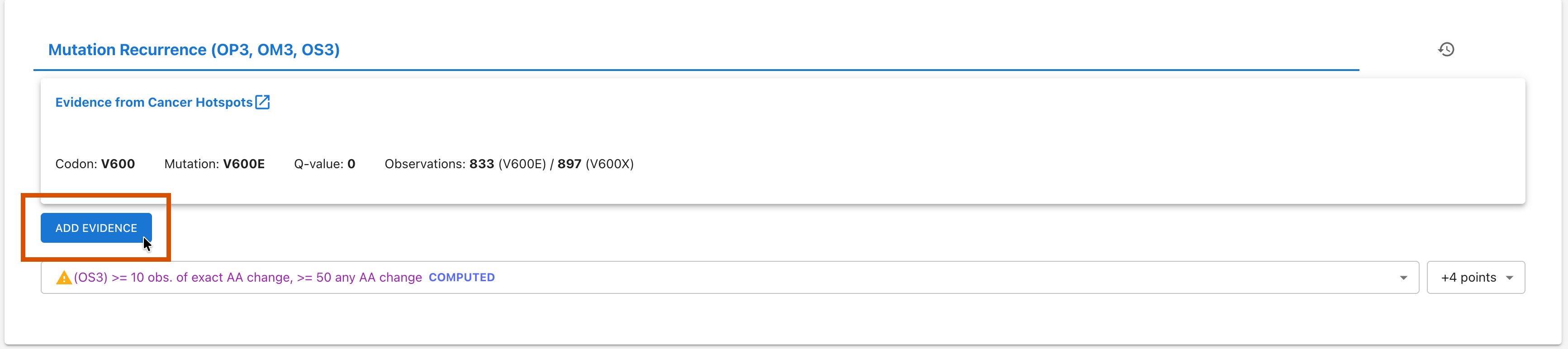
To add evidence to an oncogenicity assertion, navigate to the sub-section for the relevant evidence type and select the section's "Add Evidence" button:
A pop-up modal will prompt you to enter the information required for the evidence entry. The available fields will depend on the type of evidence you are adding; but at a minimum, you will always be asked to provide your source for the evidence in the form of PMID(s) and/or Hypothes.is link(s).
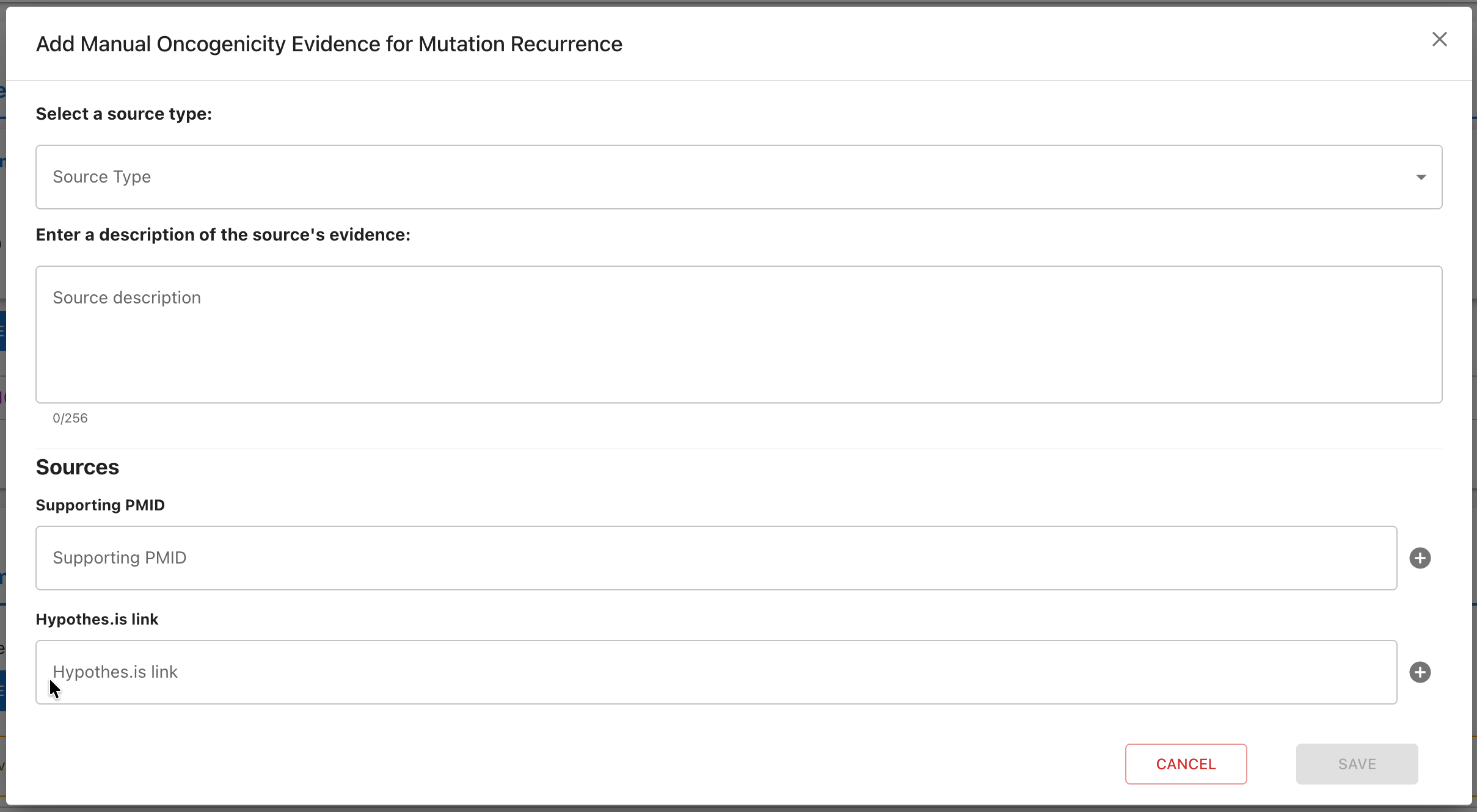
The "Save" button will be disabled until all required fields have been filled. When everything is ready, hit "Save" to add this evidence to the assertion.
Adding Evidence to Non-Oncogenic Assertions
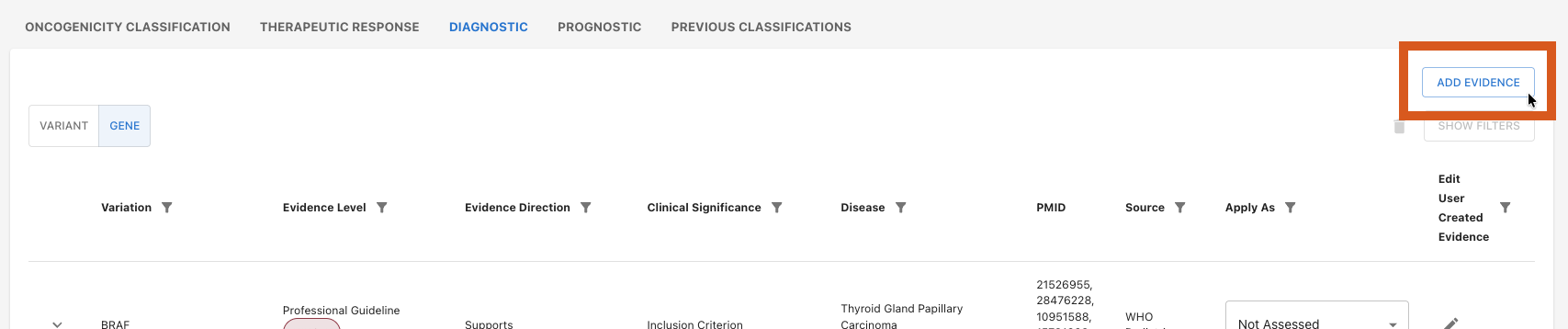
Evidence for all other assertions is added via the "Add Evidence" button in the upper-right corner of the assertion's evidence tab:
The "Add Evidence" modal will display:
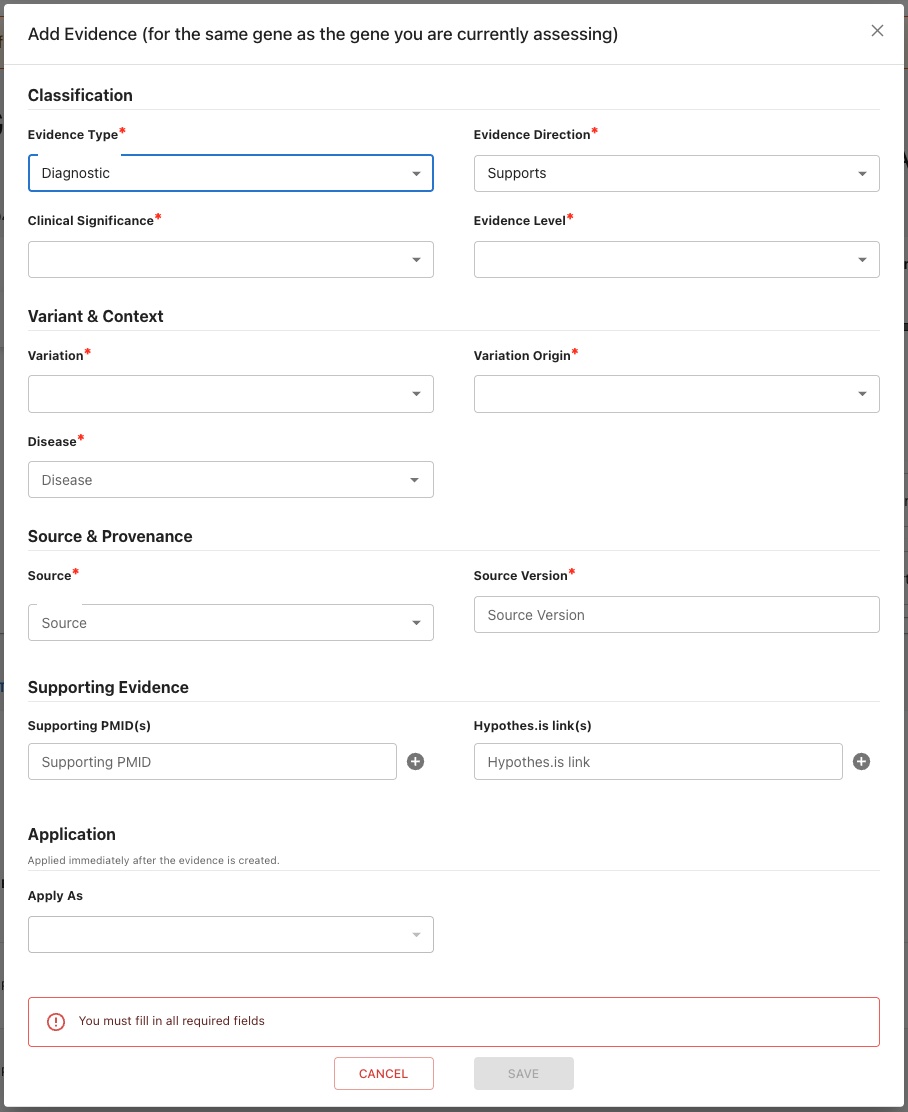
Fill out this form section by section as follows:
Classification:
| Field | Purpose |
|---|---|
| Evidence Type | The type of assertion this evidence is for. |
| Evidence Direction | Whether this evidence supports or refutes the assertion. |
| Clinical Significance | The clinical direction supported by this evidence. |
| Evidence Level | The strength of this evidence entry's source. Depending on the selected Evidence Type (i.e., the type of assertion this evidence supports/refutes), some combination of the following options will be available:
|
| Cohort Size ( Clinical Intervention evidence level only) |
The number of individuals or samples used in the clinical intervention. |
Variant & Context:
| Field | Purpose |
|---|---|
| Variation | What type of variation this evidence is for (protein, coding, genomic, etc.). |
| Variation Label ( Other variations only) |
What type of variation this evidence is for. |
| Variation Origin | Whether this evidence is for a somatic or germline variation. |
| Disease | The disease relevant to this evidence. |
| Drug ( Therapeutic Response only) |
The drug(s) relevant to this evidence. |
| Drug Interaction Type ( Therapeutic Response only) |
How these drugs interact with one another, if more than one drug is listed. |
Source & Provenance:
| Field | Purpose |
|---|---|
| Source | Where this evidence originated. |
| Type ( NCCN & WHO sources only) |
Specifies the source's subtype. |
| WHO Details ( WHO source only) |
Details specific to WHO-sourced evidence. Includes the following subfields:
|
| Source Name ( Other source only) |
The name of the source. |
| Source Version | The version of this source used to create this evidence (e.g., the date the source was published, the edition number of the source, etc.) |
Supporting Evidence (Optional):
| Field | Purpose |
|---|---|
| Supporting PMID(s) | PMID(s) for sources from which this evidence was drawn. |
| Supporting Hypothes.is link(s) | Hypothes.is link(s) for sources from which this evidence was drawn. |
Application (Optional):
| Field | Purpose |
|---|---|
| Apply As | The way in which this evidence should be applied to the listed assertion. |